Lockouts · Toronto
Lost Keys — Same-Visit Rekey
You let a part-time employee go on Friday. The shop key is on a ring in their apartment, or their car, or a friend's kitchen, and on Monday morning the register and the stock room open with it.
Lost Keys — Same-Visit Rekey
In plain words
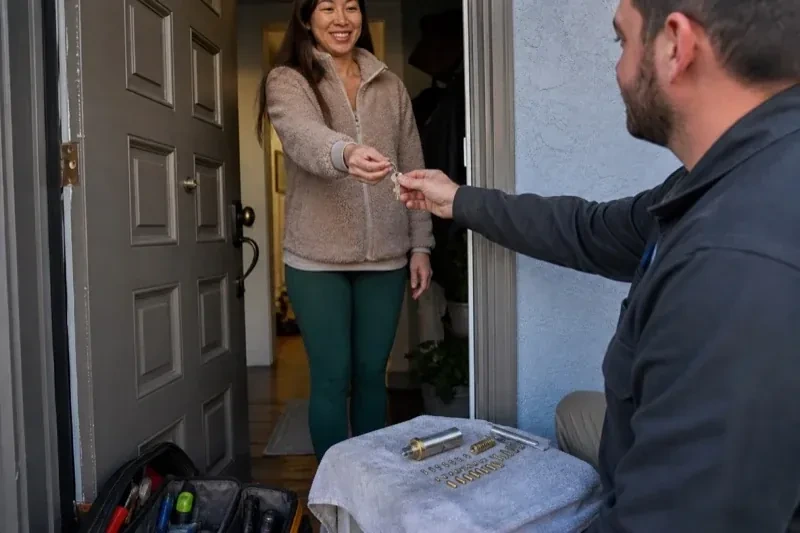
If you rent, losing a key is handled in three steps rather than one. Tell your landlord first, since a lock change on a rented unit goes smoother when both sides know about it and both end up with a working key. Then the locksmith rekeys the suite door, and any other cylinder that key fitted, with both parties knowing. Finally new keys are cut for you and for the landlord's set, so the arrangement that existed before the loss is restored on a fresh combination. Landlords generally welcome the call; their hardware stays in place and their own key set is refreshed too.
How the visit goesThe lawyer's envelope held two keys for the new house. The previous owners mention a cleaner, a dog walker and a brother who checked on the place, and the builder's paperwork shows six were cut originally. Four are unaccounted for.
Toronto
How the visit goes
Where the tenant and landlord line falls
Rented and shared buildings add a boundary that the locksmith maps early. A tenant's suite door is theirs to use but a lock change is agreed with the landlord, who receives keys as well. A condominium suite cylinder may sit on the building's master system, so its rekey is planned so the master still works, and the lobby, garage and amenity doors stay with the corporation. A small business rekeying a shop door checks what the lease says about the landlord holding a key. Sorting this out on the doorstep keeps every party informed and lets the work proceed with no surprise phone calls the following week.
Bringing every door onto one key
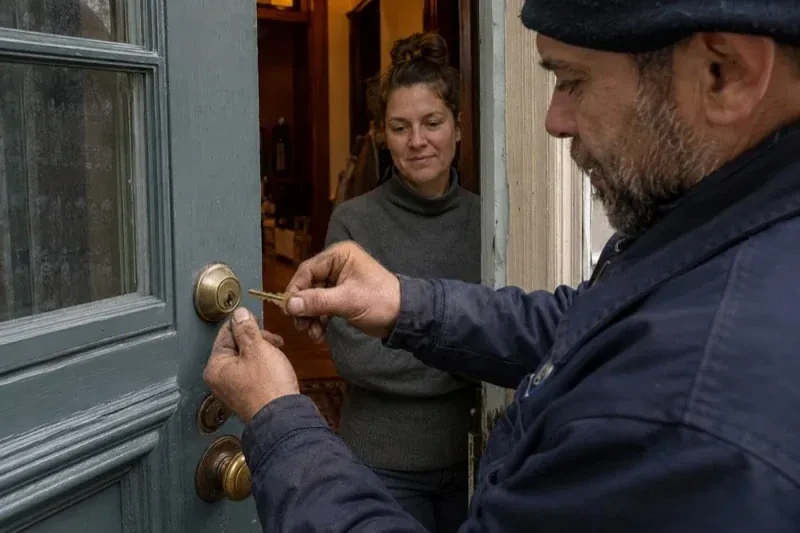
When the household wants a single key, the locksmith pins each compatible cylinder to the same combination in turn, using the same cut key as the reference so nothing drifts between doors. A cylinder from a different keyway family is exchanged for one that matches, or the household keeps a second key for that door if they prefer. Where a home has a keyed garage entry, a shed and a gate on the same list, they follow the same process. The finished set is tried door by door with a single key, and the spare cylinders and old keys are gathered up so nothing that fits the old combination stays in circulation.
The code written down for next time
The new combination is recorded as a short code, either on a card the locksmith gives you or on the key tag, and a copy stays in the locksmith's job notes if you wish. That code is what makes future copies accurate: a key cut to code has fresh, original depths, while a copy of a worn key inherits every rounded edge. It also means a lost key years from now is met with a different code, never a repeat. Keep the card with the house papers, and when a new key is needed, ask for it to be cut from the code rather than traced from a tired one.
Lost Keys — Same-Visit Rekey
In the van
- Rekeying pin kit
- Plug follower set
- Top pins and cylinder springs
- Cylinder retaining-clip and cap tools
- Dry graphite or PTFE lubricant
What affects the quote
Same fees day, night or weekend
1Getting to each cylinder
Doors spread across a large lot, a suite up several flights behind a locked lobby, or a gated property with a padlock at the road add walking and waiting time that the quote allows for.
2Number of keys cut
New keys are cut on site and counted individually. Two for a couple or six for a household with teenagers and a sitter: name the number and the quote reflects it.
3The kind of lock each cylinder lives in
Knob, lever, deadbolt, mortise and rim cylinders come out of the door differently and take different care to refit. A mortise cylinder in a century home is more involved than a builder-grade knob.
Lost Keys — Same-Visit Rekey: questions
Should I rekey when I move into a new home?
Lock manufacturers list moving as one of the main reasons to rekey, and it is easy to see why: previous owners, their relatives, a cleaner, a dog walker and a contractor may all hold copies you know nothing about. Rekeying every exterior cylinder in one visit resets the count to the keys in your hand, and it is a convenient moment to put every door on a single key as well.
Does rekeying weaken the lock?
No. On a conventional pin-tumbler cylinder, the housing, springs and top pins are untouched and only the bottom pins are exchanged for the same grade of part the lock left the factory with; a homeowner-rekeyable design is reset through its own procedure instead, and a high-security cylinder may also need its sidebar or finger-pin elements reset. If the locksmith notices worn parts, replacing them is offered as a separate step, leaving the lock stronger, not weaker.
What about the mailbox key?
It depends on whose mailbox it is. A private box at your door or on your post is yours, and its small cylinder can be rekeyed or replaced in the same visit. A compartment in a community mailbox or an apartment mailroom belongs to the postal service or the building, which handles lost-key lock changes through its own process. The locksmith will tell you which you have and who to call.
Lockout Services
- Business Lockout ServiceYou signed the lease on the unit last week and the landlord handed over possession, but the…
- Broken Key ExtractionThe key went in like any other morning, you turned it, and something gave with a small metallic…
- Break-In Damage Lock RepairThe back door looks closed until you touch it.
Lost Keys — Same-Visit Rekey near you
Every lock service we provide in Toronto starts with the same first step, which is looking at the door properly before deciding anything. The individual pages below explain what that look involves for each job, how the work is carried out, and what to expect from the hardware afterwards.