Lockouts · Toronto
Home Lockout Service
The moving truck has left, half the boxes are inside, and the single key the previous owner handed over turns the knob but not the deadbolt. Someone locked it on the way out, and nobody has a key that fits it.
Home Lockout Service
In plain words
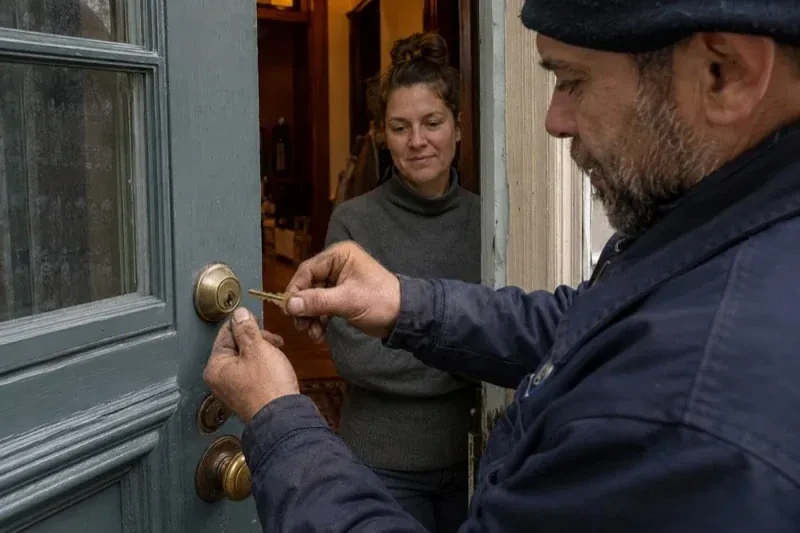
Different locks call for different openings, and a lockout visit starts by reading the hardware on your door. A spring latch in a knob or lever behaves differently from a deadbolt, a mortise lock in an older home has its own internals, and a high-security cylinder resists shortcuts that work on builder-grade hardware. A smart lock adds batteries and, on many models, a hidden keyed override, though some key-free designs rely instead on their own backup power, codes or app access. Knowing which is in front of them lets the locksmith pick, decode or bypass the mechanism, keeping the lock intact rather than reaching for a drill.
How the visit goesThe moving truck has left, half the boxes are inside, and the single key the previous owner handed over turns the knob but not the deadbolt. Someone locked it on the way out, and nobody has a key that fits it.
Toronto
How the visit goes
Reading the lock itself
Every lock announces what it is to someone who knows where to look. The shape of the keyway, the maker's mark on the face, the presence of a thumb-turn or a second keyed side, and whether the door has a separate deadbolt above a latching knob all tell the locksmith which family of hardware they are dealing with. A residential pin-tumbler cylinder, a mortise case in a century home, a restricted keyway with security pins and a keypad lock with a hidden override each respond to different techniques. Identifying the lock correctly before touching it is what makes a clean, non-destructive opening the usual outcome.
When drilling is the right answer
Occasionally a cylinder is seized, badly worn, packed with a broken key or built to resist picking to a degree that makes it impractical. In that case the locksmith explains, before starting, that the cylinder will be sacrificed and replaced. The drilling is aimed precisely at the shear line so the plug can turn, which keeps the damage to the cylinder alone and leaves the door, the trim and the bolt untouched. A new cylinder or complete deadbolt is fitted in the same visit, new keys are cut and tested, and the old hardware is handed to you or taken away as you prefer. You leave with a working, lockable door, not a temporary patch.
Looking after the cylinder afterwards
A lock that has just been opened deserves a little care so it keeps turning sweetly. Twice a year, follow your lock's own maintenance guidance: many residential cylinders take a puff of dry graphite or PTFE lubricant into the keyway, some a specified liquid product instead; general-purpose oil sprays attract dust and gum the pins. Wipe grit off your keys before using them, and retire a key that has worn thin or bent, cutting a new one from the code or from a crisp original rather than from a tired copy. If the key starts to need a wiggle to turn, that is the cylinder asking for attention early, while it is still an easy fix rather than a lockout.
Home Lockout Service
In the van
- Plug follower and repinning kit
- Dry graphite or PTFE lubricant
- Plug spinner
- Lock de-icer
- Latch and bypass tools
What affects the quote
Same fees day, night or weekend
1Any upgrade you choose while the locksmith is there
Some people use the visit to move to a heavier deadbolt, a reinforced strike, a keypad or a lockbox. None of it is required to get you inside; each option is priced as a separate line.
2Damage from earlier attempts
A latch bent by a credit card or a cylinder scarred by a screwdriver may need repair or replacement in addition to the opening. The locksmith points out what was already there before quoting that part.
3Keying other doors to match
Bringing the back door, side door and garage onto the new key after a rekey is extra work per cylinder, and simplest to arrange during the same call-out.
Home Lockout Service: questions
Should I rekey my locks after being locked out?
It depends entirely on where the key is. If it was inside the house the whole time, your locks are exactly as secure as they were yesterday and nothing needs changing. If the key was lost or stolen, rekeying is the sensible follow-up, because it retires that key for good while keeping your existing hardware. Lock manufacturers give a lost or stolen key as one of the main reasons to rekey, and doing it during the same visit saves a second call.
If my key is lost, will I leave with a working key?
Yes, one way or another. If you choose to rekey, the cylinder is set to a new combination and fresh keys are cut for it on the spot, usually two or three, and tested in each door they should open. If you prefer to keep the existing pinning, a new key can be cut to the lock's code or by decoding the cylinder. Either way you are not left relying on a key that is somewhere else.
I rent my place. Can I call a locksmith myself?
Yes. A tenant locked out of their own unit can arrange entry directly, and the identification check is the same: something that ties you to the address, such as a lease, a bill or a piece of mail, plus photo identification. Where you may want to involve your landlord is any change to the lock afterwards, because tenancy rules in this province expect landlords and tenants to agree on lock changes and to share keys. A locksmith can note what was done for the building manager.
Lockout Services
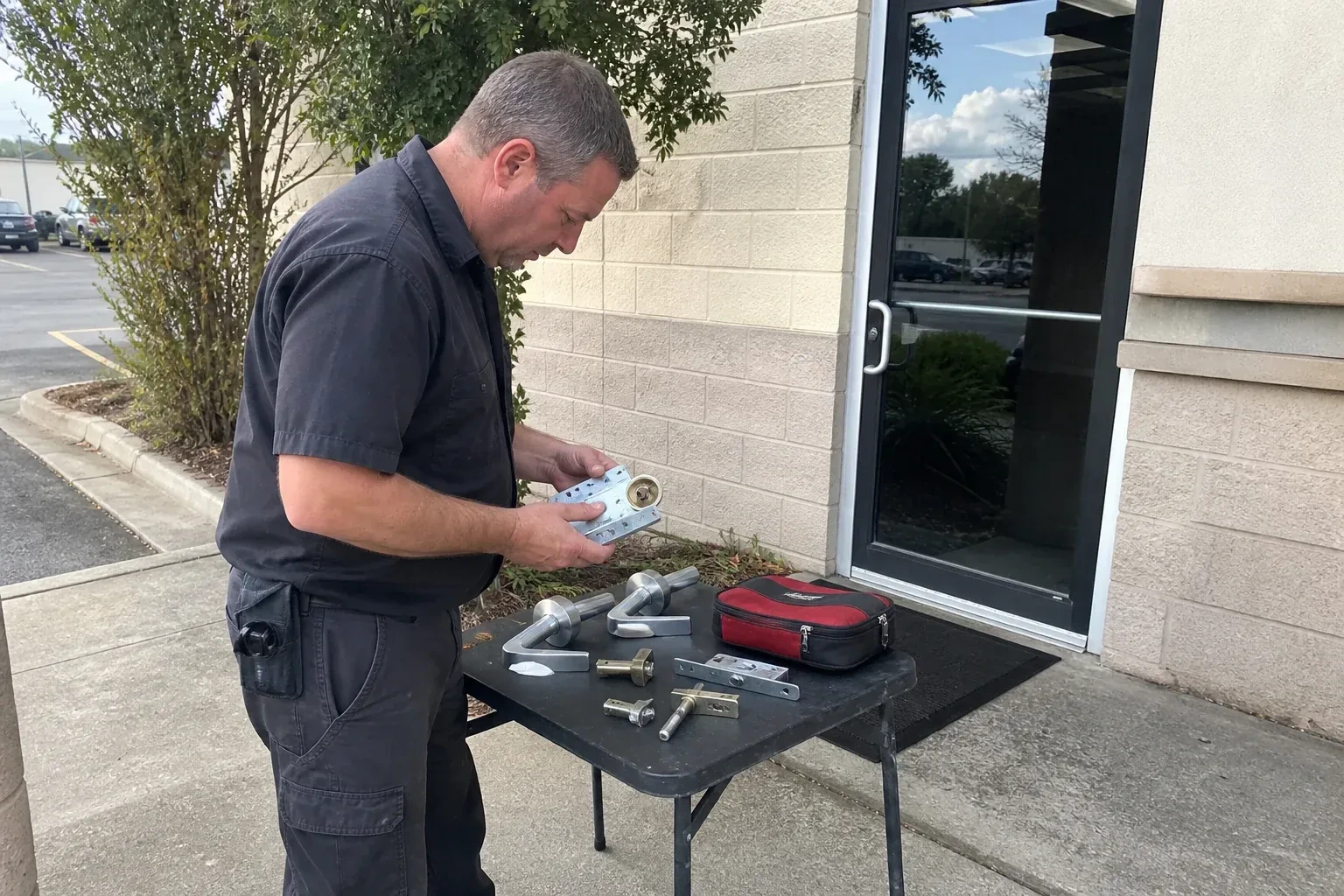
- Broken Key ExtractionThe key went in like any other morning, you turned it, and something gave with a small metallic…
- Break-In Damage Lock RepairThe back door looks closed until you touch it.
- Seized & Jammed Lock OpeningThe old mortise lock on the front door of the house turns the key halfway and stops with a dull…
Home Lockout Service near you
Every lock service we provide in Toronto starts with the same first step, which is looking at the door properly before deciding anything. The individual pages below explain what that look involves for each job, how the work is carried out, and what to expect from the hardware afterwards.