Car keys · Toronto
Car Key Replacement
The engine cranks, catches for a second and dies, and a small key-shaped light keeps blinking on the dash. The blade turns the ignition and the doors perfectly well, but the car has stopped recognizing the chip inside the key.
Car Key Replacement
In plain words
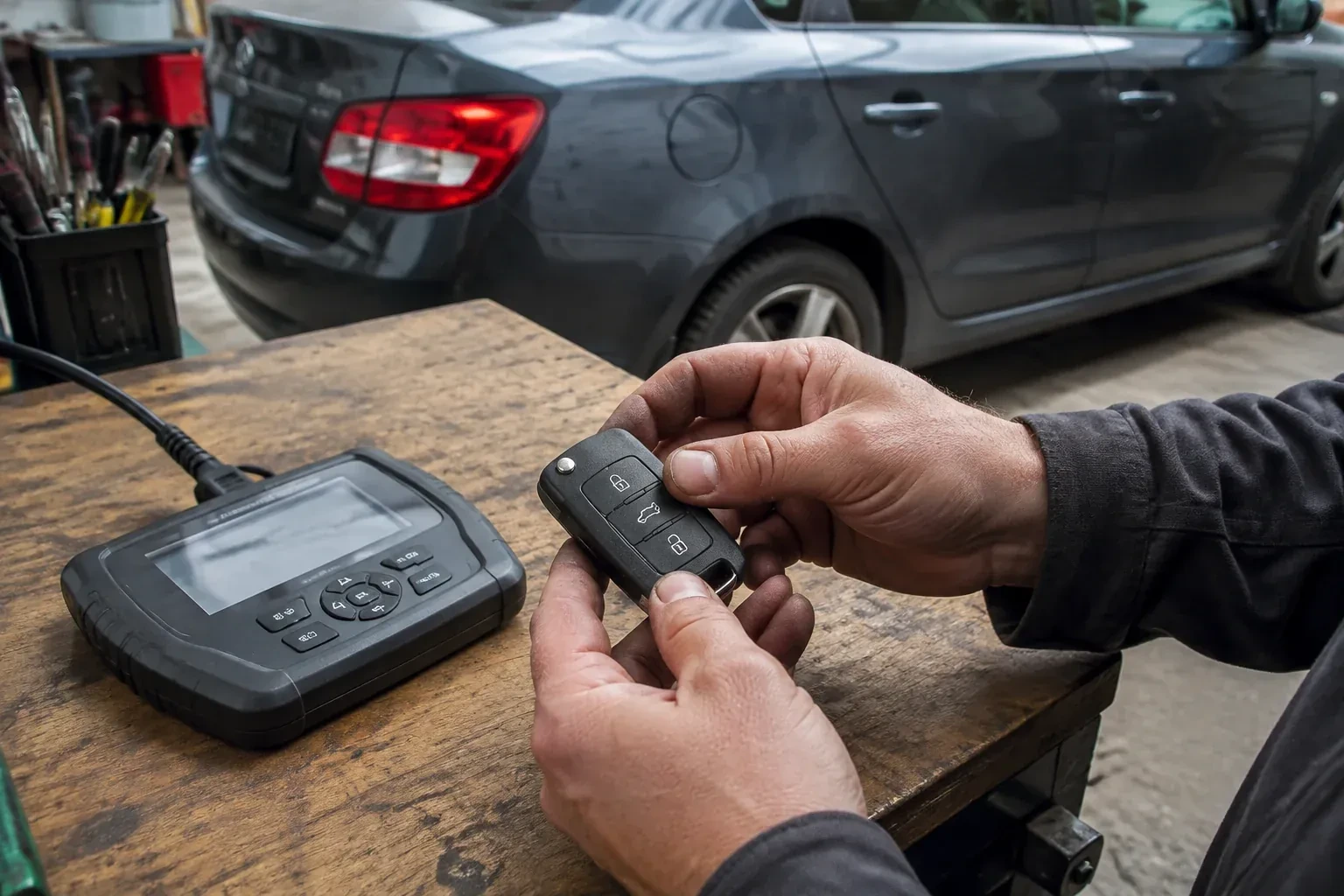
Car key replacement means producing a key that works your specific vehicle when the original is lost, broken, stolen or no longer recognized. On many modern cars that is more than cutting metal: the blade fits the locks, a transponder is taught to the immobilizer before the engine will run, and any remote or proximity function is paired separately; some current vehicles instead use a phone key or key card with no cut blade at all. An automotive locksmith confirms your entitlement, identifies the exact key system from the VIN, cuts the blade to code, programs the electronics and tests every function before handing it over.
How the visit goesThe key snapped at the head while you were turning it in a stiff, frosty door lock. Half the blade is in your hand, the rest is inside the lock, and the plastic head still lights up when you press a button.
Toronto
How the visit goes
The locks and ignition, not only the key
A new key is only as good as the cylinders it turns, so the check looks at the car too. A door lock that has gone unused for years on a keyless vehicle can be stiff with salt and grit; an ignition that needed a jiggle with the old key has worn wafers that will feel tight with a fresh blade; a previous replacement may have left the doors and ignition on different cuts. Aftermarket alarms and remote starters can also sit between the key and the immobilizer. Spotting these early lets the locksmith bring the right parts and explain what else the car may need so the new key feels right.
Pairing the remote and the proximity fob
The buttons on a key and the transponder in it are usually separate systems, and the remote is paired in its own step. Depending on the vehicle, that is an on-board routine of ignition cycles and button presses, or a command sent through the programming tool. A proximity fob is registered so the car detects it near the door handles and inside the cabin, and push-button start is tested with the fob in a pocket, then held against the start button as the backup method. Remote start, trunk release and panic are checked one at a time, since a wrong part number can pass every step except the one you use most.
Keys that work every lock on the car
You leave with keys that have been tried, not merely programmed. Each one has opened the doors, turned or woken the ignition, started the engine and worked every button it carries, and you have watched it happen. If the car has a mechanical lock that was stiff, it has been freed and lubricated so the blade is a genuine backup. Should the old key have been rebuilt around its original electronics, it has been through the same checks as a brand-new one. The point of the routine is simple: the next time you reach for the key, there is nothing to wonder about.
Car Key Replacement
In the van
- Decoding pick and lock reader
- Remote frequency tester
- Transponder key blank
- Vehicle battery maintainer
- Transponder chip
What affects the quote
Same fees day, night or weekend
1Programming route the car allows
Some vehicles accept a new key through an on-board routine, most through the programming tool, and a few only through a dealer procedure. The route determines the time and the data involved, and the quote says which it is.
2Where the vehicle is
Travel is part of every mobile call. A car on a driveway across town and one in a lot at the end of a rural road involve different trips, and the quote reflects the distance.
3Condition of the locks and ignition
A door cylinder seized with salt or an ignition with worn wafers may need freeing, servicing or rebuilding for the new key to feel right. That work is quoted as its own item alongside the key.
Car Key Replacement: questions
Can you make a key if every key to the car is gone?
Often, yes, for vehicles with a supported conventional key system: the car is opened, a blade is produced by decoding the door lock or retrieving the factory key code, and the immobilizer is reset so the missing keys are erased before new ones are stored. A key-card or phone-key vehicle, or one needing a dealer procedure, follows its own route instead, which is why the VIN is asked for on the first call.
Does programming a new key affect the keys I already have?
Adding a key leaves the existing keys in place; the car simply learns one more. The exception is a deliberate all-keys-lost reset or an erase you ask for, which clears every stored key and then registers only the ones you present. For that reason the locksmith asks you to bring every key you own to the visit, so each one can be re-registered and tested rather than left behind and forgotten by the car.
The car is leased or belongs to my employer. Can you still make me a key?
Yes, with the right paperwork. For a leased car, the lease agreement in your name together with your identification and the permit covers it. For a company vehicle, the locksmith needs authorization from the business: a work order, purchase order or letter naming the VIN and the person collecting the key. Mention the arrangement when you call so the correct document is ready and the record can be completed properly.
Car Keys
- Spare Car Key DuplicationThe blade on the everyday key has gone shiny and thin along one edge, and lately it needs a wiggle…
- Key Fob ProgrammingThe remote clicks the way it always has, but the vehicle no longer locks, unlocks or answers with…
- Transponder Key ProgrammingEvery key that ever opened the car is gone at once, one taken with a stolen bag, the spare…
Car Key Replacement near you
Every lock service we provide in Toronto starts with the same first step, which is looking at the door properly before deciding anything. The individual pages below explain what that look involves for each job, how the work is carried out, and what to expect from the hardware afterwards.