High security · Toronto
Safe Opening & Combination Change
Pry marks circle the dial after an overnight break-in attempt, and the safe now refuses every number that used to open it, as if something inside has locked itself down.
Safe Opening & Combination Change
In plain words
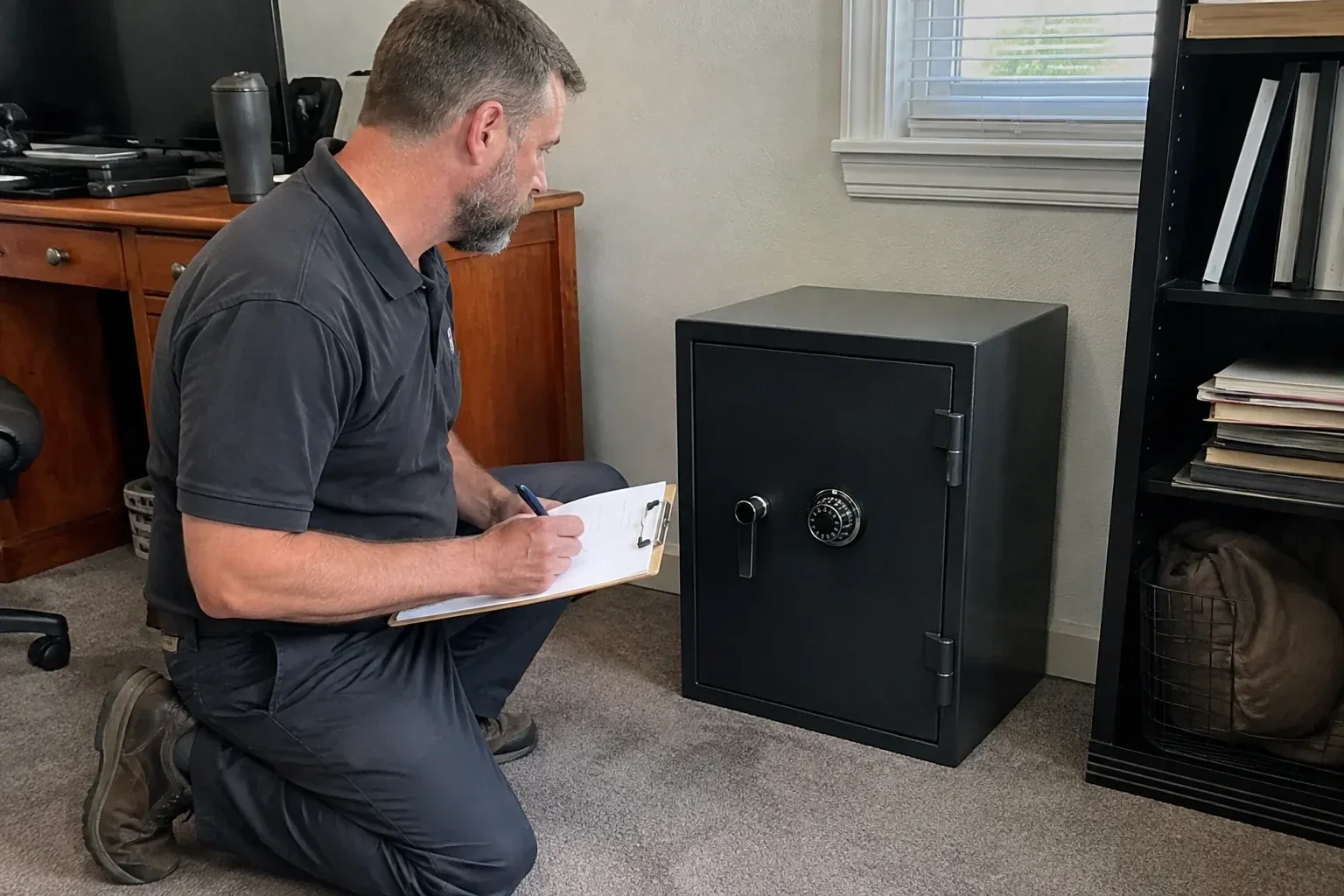
Safe opening favours the gentlest method that fits the particular safe and lock, with drilling kept as a later option rather than a first resort. Manipulation and decoding are tried first for a mechanical dial, and a manufacturer reset or override path where one exists for an electronic keypad. Where those routes are unavailable or exhausted, drilling enters the conversation, aimed at a point the maker's own service literature marks as reachable and repairable. Most safes that still have their original lock in reasonable condition never reach that last rung at all.
How the visit goesA software update reset the clinic's small safe overnight, and the receptionist's usual code now does nothing on a keypad that lights up but goes no further.
Toronto
How the visit goes
Checking the bolt work and handle
A locked-out safe is not always a locked-out lock. The locksmith checks whether the handle turns normally, whether the bolt work is retracting at all, and whether resistance shows up at the handle rather than at the dial or keypad. A jammed bolt, a corroded linkage or a relocker that has dropped into place can all hold a door shut even when the correct combination is entered without complaint. Sorting this out before assuming the lock has failed avoids replacing a perfectly good combination lock to solve a mechanical problem that sits elsewhere in the door.
Freeing a jammed relocker or bolt work
When the combination or code is correct but the door still will not move, the problem sits in the bolt work rather than the lock. The locksmith traces the linkage between the lock and the bolts, looking for a tripped relocker, corrosion, or a bent part from an earlier impact, and works to free or bypass the specific point that is jammed. This sometimes means accessing the mechanism from the back or side of the safe rather than through the lock face at all. Once the bolts move freely again, the lock itself is tested separately to confirm it was never the actual fault.
A little care keeps the lock reliable
A mechanical dial benefits from being turned through a full combination cycle occasionally even when the safe is not otherwise in use, since a dial left untouched for years is more likely to develop the stiffness that led to this visit. An electronic keypad benefits from a battery change on a set schedule rather than waiting for a low-battery warning to appear, since a dead battery at an inconvenient moment is the more common failure than the lock itself. Wiping the keypad and dial face of dust occasionally, without any liquid cleaner, keeps both types responding the way they should.
Safe Opening & Combination Change
In the van
- Drill rig and carbide bits
- Manufacturer reset tool
- Spindle and drive cam
- Replacement dial and ring
- Replacement wheel pack
What affects the quote
Same fees day, night or weekend
1Security rating of the existing lock
A higher-rated lock, such as a UL Group 1 mechanical lock, generally takes longer to manipulate or decode than a basic Group 2 lock, and that time is reflected in the visit.
2Multiple safes or vaults at one site
A property with more than one safe, such as a retail floor safe and a separate office unit, is quoted as a longer visit covering each one in turn.
3Damage from a prior break-in attempt
Pry marks, drill attempts or a tripped relocker from an earlier incident mean assessing and repairing that damage in addition to the combination work the visit was booked for.
Safe Opening & Combination Change: questions
What is a relocker, and does it change how the safe is opened?
A relocker is a small device inside some safes built to jam the bolt work until a trained technician services it, if the case is drilled in the wrong spot, dropped, or exposed to fire, as a defence against forced entry. If one has tripped, the fix is mechanical: freeing or replacing the relocking mechanism, rather than another attempt at the combination. Recognizing a tripped relocker early changes the plan from the first visit rather than after several failed attempts.
Can the same visit both open the safe and service it?
Yes. Once the safe is open, the lock is inspected for wear, corrosion or damage, repaired or replaced if needed, and reset to a new combination in the same visit. Any bolt work or handle issue found along the way is addressed at the same time rather than requiring a separate appointment.
Do you need the safe's model or serial number before you arrive?
It helps but is not required. A data plate on the door or frame, a purchase receipt, or a manual kept in a drawer all speed up identifying the lock family in advance. Where none of that survives, the locksmith identifies the safe from its case shape, dial style and handle once on site, which simply adds a short assessment step at the start of the visit.
High Security Locks
Safe Opening & Combination Change near you
Every lock service we provide in Toronto starts with the same first step, which is looking at the door properly before deciding anything. The individual pages below explain what that look involves for each job, how the work is carried out, and what to expect from the hardware afterwards.