Change or rekey · Toronto
Deadbolt Installation
Someone tried the door last winter. The frame took it, but the strike plate is bent, one screw hole is stripped, and the bolt sits in the pocket at a slight angle.
Deadbolt Installation
In plain words
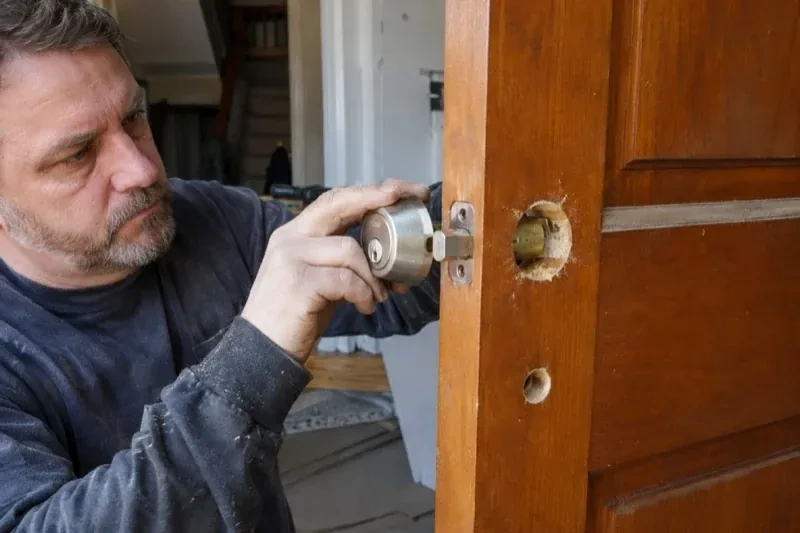
Deadbolt installation puts a solid bolt lock on a door that either has none or has one that is past its useful life. Unlike the spring latch in a knob or lever, a deadbolt is a straight bar of metal that only moves when the key or thumb-turn moves it, so a card slipped into the gap or a shove against the door does nothing. The locksmith bores the door if needed, fits the bolt and cylinder, cuts a proper pocket in the frame and secures a reinforced strike with screws long enough to reach the framing. You are left with a door that locks with a firm, full throw.
How the visit goesYou bought a keypad deadbolt online and pulled the old one off, only to find the hole in the door is a different size and the bolt latch sits at a backset the new kit does not list. The door is now open and the box is on the counter.
Toronto
How the visit goes
Which key should open it
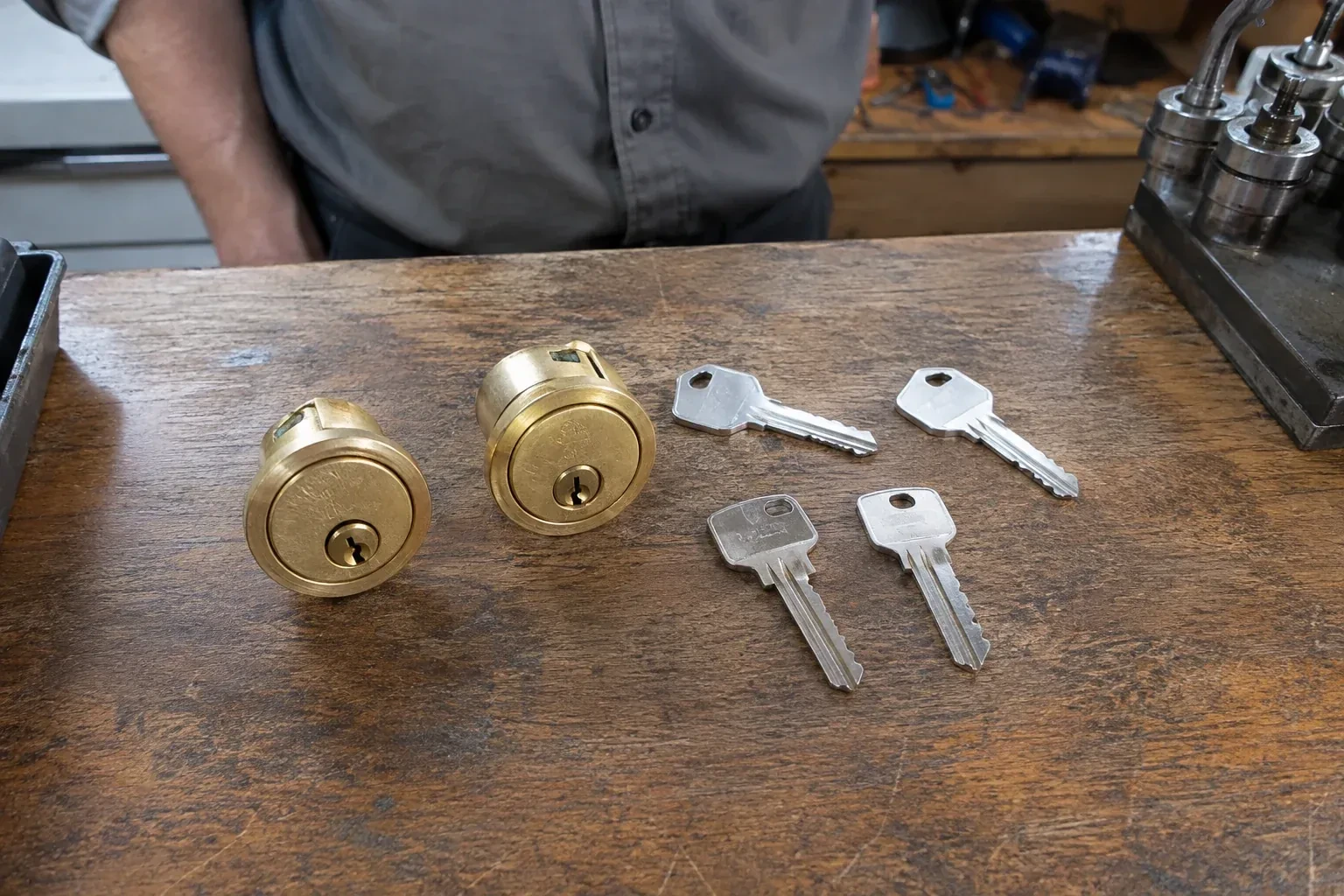
A deadbolt is also a key decision, so the locksmith asks how the household's keys are arranged now. If every door shares one key, the new cylinder can be pinned to that same key, provided the keyways match, so nobody's ring grows. If the house has just changed hands, this is the natural time to set the new bolt and the other exterior locks to a fresh key and retire whatever copies are out there. Restricted or high-security keyways, keypad models with a backup cylinder and locks that must match a rental building's system all steer the choice of hardware, and it is easier to settle this before the box is opened than after.
Working on a steel-clad or fibreglass door
Insulated doors are cut with the skin in mind. A hole saw with fine teeth is run at low speed through the metal face, with the jig doing the steering so the saw does not skate on the smooth surface, and the cut is finished from the second face to keep both skins clean. Swarf is vacuumed out of the core so it cannot work into the bolt. The edge is usually a wood or composite stile inside a folded metal lip, and the bolt is finished with a drive-in collar or a plate screwed into the stile rather than a chiselled mortise. Fibreglass is scored first so the skin does not chip, then cut the same way.
Looking after it through the seasons
A deadbolt asks for very little, and most of it happens twice a year. In spring and again in autumn, throw the bolt with the door closed and notice whether it still slides in freely; wood doors swell in humid summers and shrink in dry winter air, and the first sign is a bolt that needs the door pulled before it will lock. If so, a small strike adjustment puts it right. Give the bolt and keyway a puff of whatever lubricant the lock's own maker specifies, often dry PTFE or graphite, since some cylinders are serviced with oil instead. Wipe salt off the outside trim after a slushy week so the finish stays bright.
Deadbolt Installation
In the van
- Dry PTFE lubricant
- Sharp chisel and mallet
- Strike box
- Boring jig and 54 mm hole saw
- Jamb reinforcer
What affects the quote
Same fees day, night or weekend
1Grade and type of deadbolt
A builder-grade bolt, a residential model with a high security grade, and a heavy commercial-pattern deadbolt sit at different points in the hardware part of the quote, and the locksmith explains the differences.
2Mechanical, keypad or smart lock
Electronic deadbolts carry a different hardware line and add setup time for codes, pairing to a phone and a walk-through, all of which appear as their own entries.
3Finish and trim style
Coated finishes built for salt and sun, matching trim for an existing handleset, and low-profile faces cost differently from a standard brass or nickel unit, and you choose the level.
Deadbolt Installation: questions
Can I supply my own deadbolt?
Yes. Bring the box, the template and the instructions, and tell the locksmith the model beforehand so the bore and backset can be checked against your door. If the kit turns out to need a larger hole or a different faceplate than the door has, the locksmith adapts the door or suggests a matching model. Hardware bought online sometimes arrives set for a different door thickness, which is a small adjustment on site.
Can the new deadbolt use the same key as my other doors?
Usually, yes. If the new lock shares a keyway with your existing cylinders, the locksmith repins it on the bench so your current key operates it, and nothing changes on anyone's ring. If the keyways differ, the other doors can be brought onto the new key instead. Say which key you want to keep before the hardware is chosen, because keyway is part of picking the lock.
What should I have ready before the locksmith arrives?
Know which doors you want bolted, what they are made of, and whether each already has a deadbolt or only a knob. A photo of the door face and edge helps. Have any existing keys to hand, decide whether you want everything on one key, and mention glass near the lock, a storm door in the same opening, or a rental agreement. If you have already bought hardware, keep the box and template together.
Change or Rekey Locks
- Lock Replacement & UpgradeEvery morning the front door key needs the same little dance: push in, lift, wiggle, turn.
- Vintage Mortise Lock ServiceAfter a wet summer the entry door sits lower in its frame.
- Smart Lock InstallationThere are four copies of the front-door key floating around: one with the cleaner, one with a…
Deadbolt Installation near you
Every lock service we provide in Toronto starts with the same first step, which is looking at the door properly before deciding anything. The individual pages below explain what that look involves for each job, how the work is carried out, and what to expect from the hardware afterwards.