Car keys · Toronto
Key Fob Programming
The remote clicks the way it always has, but the vehicle no longer locks, unlocks or answers with its usual chirp. Nothing on the dash reacts either.
Key Fob Programming
In plain words
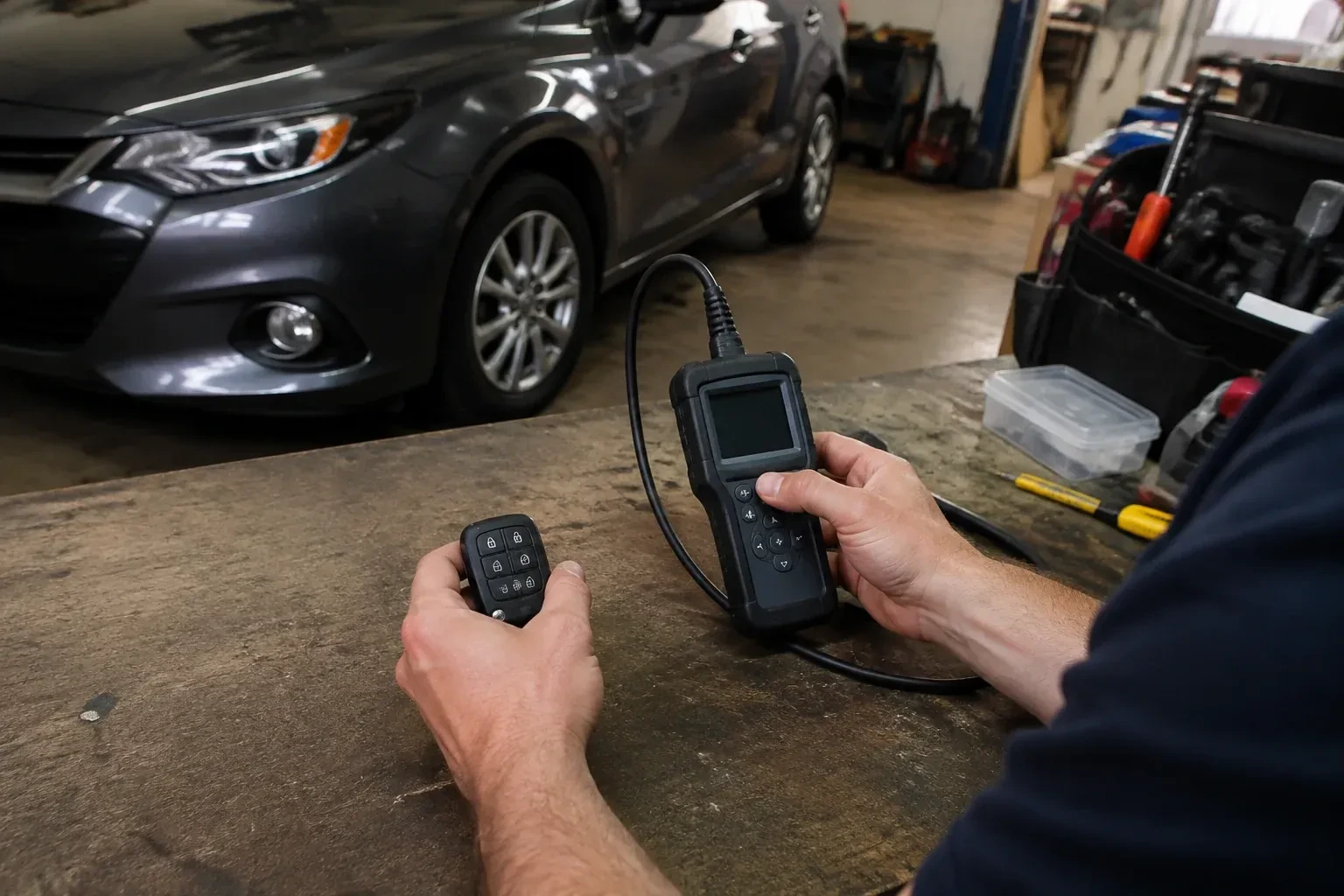
Losing a fob raises a question a spare doesn't answer on its own: whoever has the missing one can, in principle, still use it. Programming a new fob is only half the service in that situation, because the other half is removing the lost fob's electronic authorization from the vehicle's memory following that model's procedure, which stops its remote and starting functions; a mechanical blade inside it can still open an unchanged door lock, so that lock is rekeyed too where the risk warrants it. The visit closes both problems at once, leaving the household with working fobs and one less fob unaccounted for out in the world.
How the visit goesA fob went missing weeks ago somewhere between a coat pocket and a parking lot, and a spare has covered the gap since. Everything still opens and starts without trouble, which is exactly the concern: wherever that missing fob ended up, it may still work too.
Toronto
How the visit goes
Confirming who the vehicle belongs to
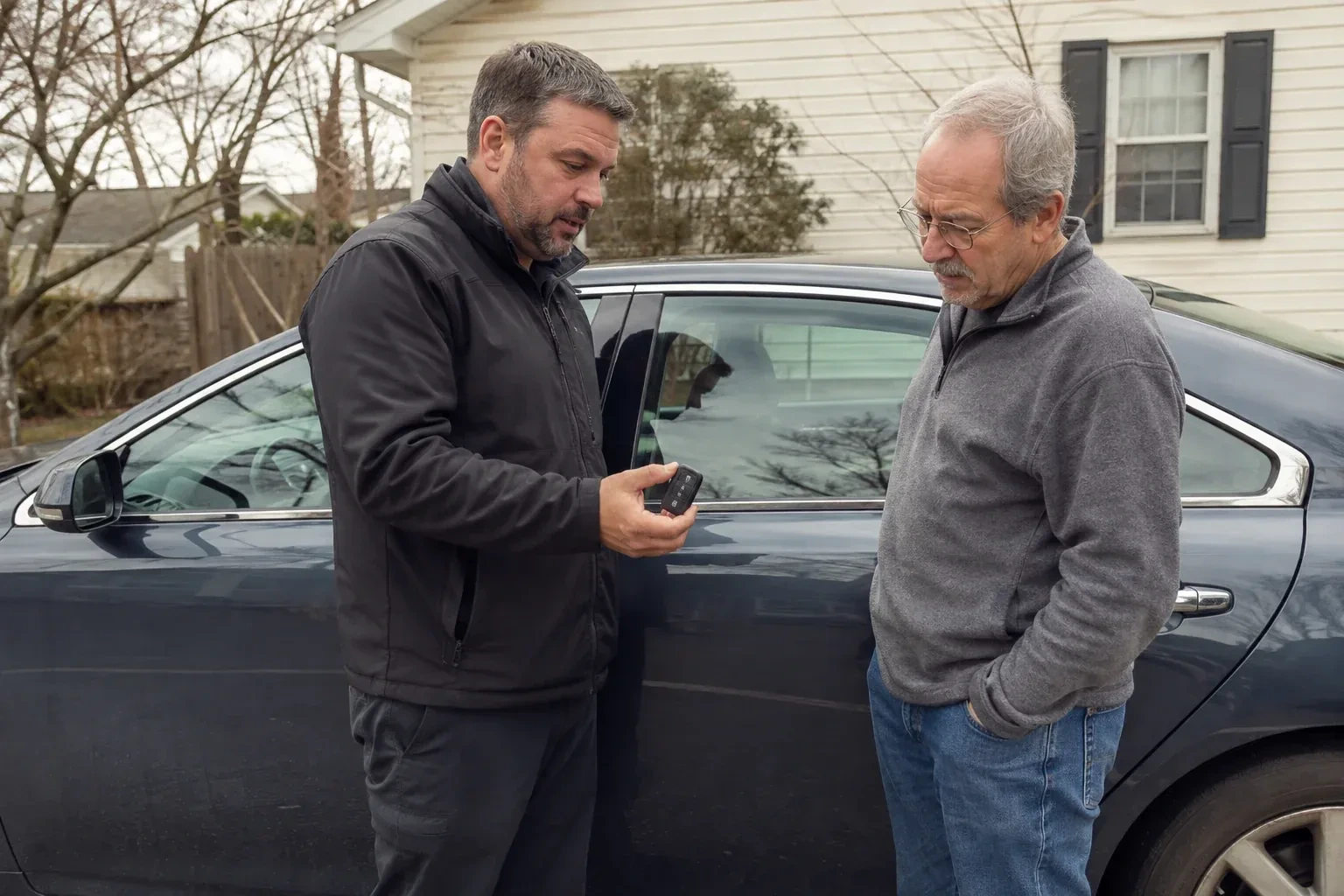
Before any fob is touched, the person requesting the work is asked to show a claim on the vehicle: registration, a bill of sale, an insurance document, or simply being present with the vehicle and its existing key. This matters for a car in the same way it matters for a house, since a fob is a way into someone's property and, on many vehicles, a way to drive off in it. Confirming ownership takes a minute at the start of the visit and settles a question that would otherwise hang over the rest of the work.
Starting over when nothing is left to vouch for a new fob
When every fob for a vehicle is genuinely gone, the procedure follows that vehicle's own route: on many systems nothing already accepted remains to authorize a new one, so the key memory is reset before anything is added back, while some vehicles instead accept an authenticated app or manufacturer service credential without a full reset. Depending on the manufacturer, a reset may need a security code tied to that vehicle, a dealer-level system, or an approved access pathway built for exactly this situation. Once the reset completes, a full new set of fobs is registered and tested, and the vehicle no longer recognizes anything that existed beforehand.
Knowing where this vehicle stands going forward
For a vehicle that turned out to need manufacturer-level access, the household leaves the visit with a clear picture rather than an unresolved gap: what was tried, what the vehicle actually requires, and which fobs are ready to go the moment that next step happens. Nothing sourced during the visit needs to be redone, and the eventual appointment, wherever it happens, starts from a documented position instead of repeating the same identification work from scratch.
Key Fob Programming
In the van
- Coin-cell fob battery
- Diagnostic port interface cable
- Replacement fob shell and buttons
- VIN and manufacturer service records
- Fob and remote signal tester
What affects the quote
Same fees day, night or weekend
1Adding a fob versus starting from nothing
Registering an additional fob while others still work is a shorter procedure than working through that vehicle's own all-keys-lost route, commonly a full key-memory reset and sometimes an app or service credential instead, after every fob has gone missing; the quote reflects which situation actually applies.
2Whether the vehicle restricts the procedure
A vehicle with a manufacturer-built security gateway may need a code or an access pathway beyond a standard visit, and that requirement, where it applies, is identified and explained before it affects the quote.
3Removing a lost fob from the vehicle's memory
Deregistering a fob's electronic authorization, following that model's procedure, when it is genuinely missing rather than simply replaced, is part of the visit and is reflected accordingly.
Key Fob Programming: questions
Do I need to prove I own the vehicle before a fob is programmed?
Yes, and it is asked for the same reason a locksmith checks identity before opening a house: a fob is a way to drive off in someone's vehicle. Registration, a bill of sale, an insurance document, or simply being present with the vehicle and an existing key generally settles it. This step protects the actual owner as much as anyone, including a future owner who buys the car from you.
What does testing remote start or passive entry actually involve?
Each function the vehicle offers is tried in person once the fob is registered: trying whatever passive-entry action that vehicle actually needs, approach alone, or a handle touch, grip or button press, pressing the remote start button and confirming the engine turns over, and checking that the vehicle re-locks or shuts down the way it is meant to. Nothing is assumed to work simply because the fob was accepted by the vehicle's memory.
What should I have ready before a key fob programming visit?
The vehicle's identification number, proof that you own or are authorized to use it, and an honest count of how many fobs exist for the car, working or not. Mention whether any fob is truly lost rather than misplaced at home, and whether the vehicle currently starts with the fob you do have. That picture lets the right procedure and parts be settled before work begins rather than partway through it.
Car Keys
- Car Key ReplacementThe engine cranks, catches for a second and dies, and a small key-shaped light keeps blinking on…
- Spare Car Key DuplicationThe blade on the everyday key has gone shiny and thin along one edge, and lately it needs a wiggle…
- Transponder Key ProgrammingEvery key that ever opened the car is gone at once, one taken with a stolen bag, the spare…
Key Fob Programming near you
Every lock service we provide in Toronto starts with the same first step, which is looking at the door properly before deciding anything. The individual pages below explain what that look involves for each job, how the work is carried out, and what to expect from the hardware afterwards.