Car keys · Toronto
Motorcycle & Scooter Keys
The key turns half a rotation in the ignition, catches, then the blade lets go with a small snap. The bow is still in your hand; the rest of it is somewhere inside a lock that now has nothing to grip.
Motorcycle & Scooter Keys
In plain words
Sometimes the machine is not the problem; the key is. A blade that has worn thin, bent slightly, or been copied one generation too many stops lifting the wafers cleanly, which shows up as a key that needs a wiggle or a lift to turn. Rather than living with an unreliable copy, a fresh key cut directly from the lock's code or read from the original wafers restores a clean, consistent turn, and the worn key can be retired instead of carried as a backup that may not work when needed.
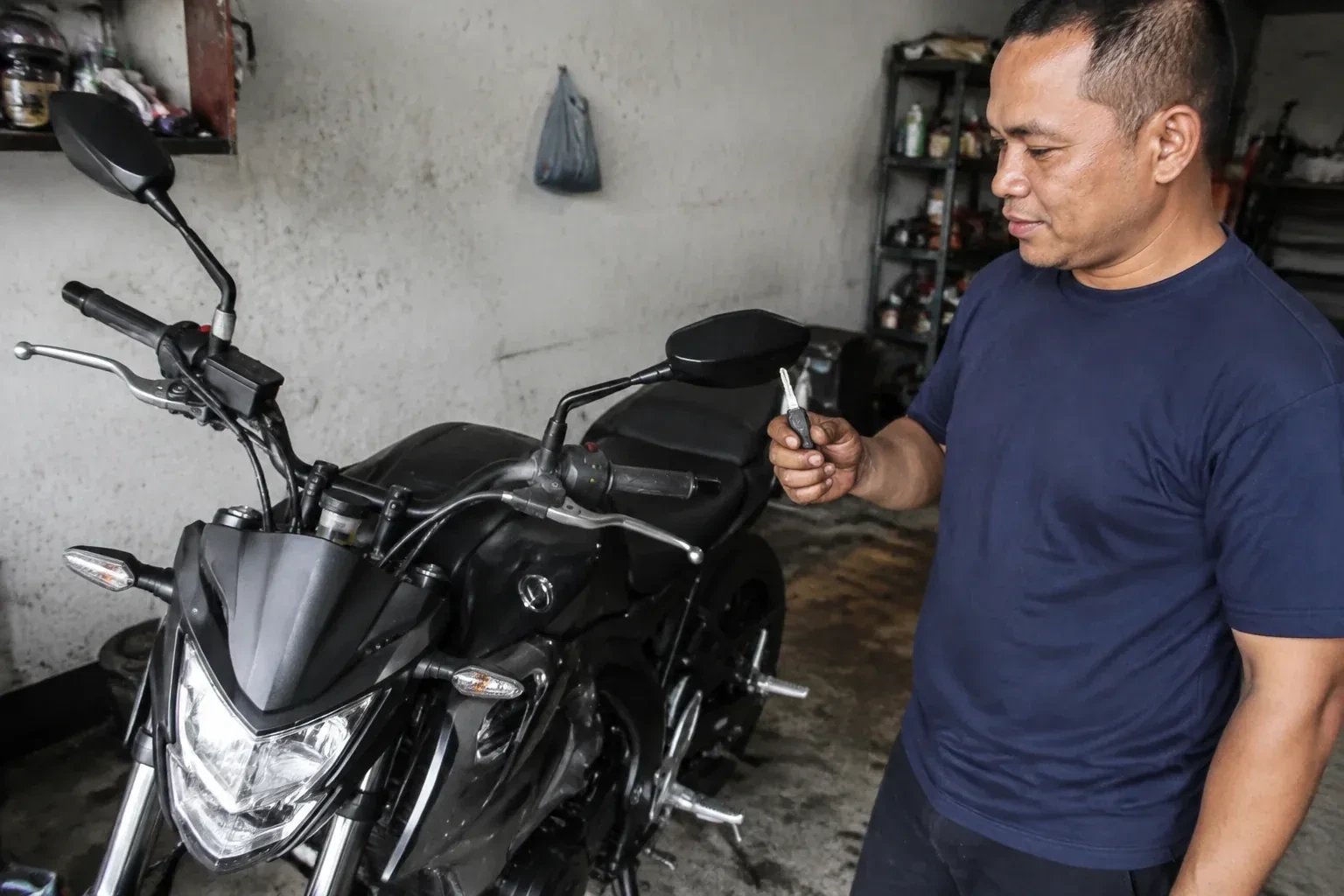
How the visit goesThe bike came home from its previous owner with a single worn key that starts the engine but does nothing for the seat latch or the fuel cap, both of which answer to keys nobody handed over.
Toronto
How the visit goes
Confirming who is asking
Before any lock is touched, the locksmith confirms that the person requesting a key has a real connection to the machine: vehicle registration, an insurance document that matches the plate, or a bill of sale for a recent purchase all work. Where paperwork is not on hand, a dealership record, a family member who can vouch for the owner, or a photo of the machine alongside identification often fills the gap. This step takes only a few minutes and stands ahead of any cutting, decoding or programming, since a working key is something that should only ever go to the person meant to hold one.
Pairing a new transponder
A machine with an immobiliser needs its electronics satisfied as well as its lock. Using either a remaining working key or programming equipment built for that system, the locksmith teaches the vehicle's module the new transponder's code where that system supports it, though some manufacturers require their own code key and a dealer procedure instead. The mechanical cut and the electronic pairing are separate steps and both have to succeed: a key can be shaped correctly and still fail to start the engine if the chip inside it was never taught to the machine, which is why this step is tested with a full engine start rather than just a turn of the switch.
Getting through the next storage season
Heading into a season of outdoor storage, a lock that has just been cleaned and lubricated is in a better position to start the next season the same way it ended this one. A light coat of corrosion inhibitor on an exposed lock face, a cover that keeps direct weather off the ignition and seat area, and keeping the machine somewhere it is not standing in meltwater all help the same mechanism that was just serviced stay free through the months it sits unused. None of this takes long, but it is easy to skip until a stiff lock brings it back to mind.
Motorcycle & Scooter Keys
In the van
- Pick and tension tools
- Manufacturer-approved lock cleaner or lubricant
- Code-cutting machine
- Transponder programming unit
- Replacement ignition or steering lock
What affects the quote
Same fees day, night or weekend
1Any prior damage or attempts
Any prior attempt at the lock, a failed hardware-store copy or a scratched keyway, may need to be worked around or corrected before a new key can be properly tested, adding to the job.
2Distance to the machine's location
Distance to wherever the machine is kept, whether a driveway across town or a more remote property, is part of every call, and travel time is reflected alongside the key work itself.
3Condition of the existing lock
A clean, well-maintained lock accepts a new key with little extra work. One affected by corrosion or grit may need cleaning or light service before a key can be tested reliably against it.
Motorcycle & Scooter Keys: questions
What should I do to look after a new key or lock afterward?
Very little beyond two simple habits: wipe the key clean before use, especially after a wet ride, and, where the lock's own maker calls for it, a light dose of the specified lubricant once or twice a year. Storing a spare somewhere other than on the machine itself rounds out the care a new key or lock generally needs.
Can a rusted or gritty lock still be opened and given a new key?
In most cases, yes. The lock is cleaned out, its wafers and springs cleared of grit and corrosion, and the mechanism dressed with whatever lubricant its own maker specifies before a new key is cut or tested. Only a lock that has corroded to the point of cracking or seizing solid tends to need outright replacement rather than cleaning, and that is usually visible once the lock is opened up for inspection.
I bought a used bike with just one worn key. What happens now?
The locksmith first identifies every lock on the machine, ignition, seat and fuel cap included, and tests the key that came with it against each one. Whatever the existing key does not already cover is then cut or decoded to match, so the outcome is a complete, known set of keys rather than a single blade of uncertain history. It is a common situation and does not require any prior records to resolve.
Car Keys
- Car Key ReplacementThe engine cranks, catches for a second and dies, and a small key-shaped light keeps blinking on…
- Spare Car Key DuplicationThe blade on the everyday key has gone shiny and thin along one edge, and lately it needs a wiggle…
- Key Fob ProgrammingThe remote clicks the way it always has, but the vehicle no longer locks, unlocks or answers with…
Motorcycle & Scooter Keys near you
Every lock service we provide in Toronto starts with the same first step, which is looking at the door properly before deciding anything. The individual pages below explain what that look involves for each job, how the work is carried out, and what to expect from the hardware afterwards.