Commercial · Toronto
Commercial-Grade Lock Replacement
A new tenant moved into the unit next door, and the property manager just found three different cylinders on three doors, none of them cut to the same key.
Commercial-Grade Lock Replacement
In plain words
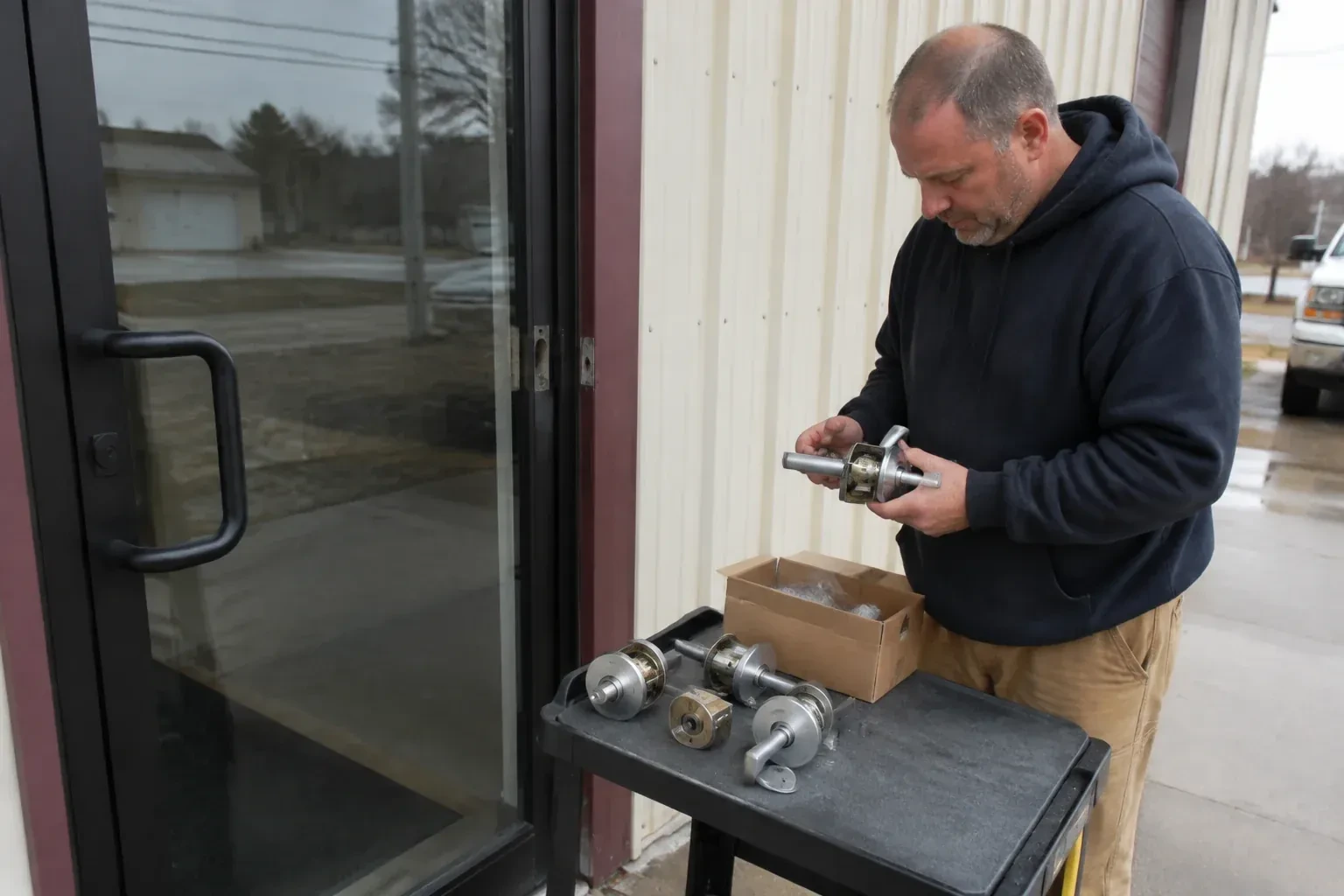
A great deal of what happens during this service is choosing the right category of hardware before a single screw comes out. Storefront glass and aluminum doors call for a narrow-stile lock or a hookbolt rather than the mortise body a solid wood or hollow-metal door would take, and a door serving a busy exit route may need listed exit hardware regardless of what was on it before. The locksmith identifies which category the opening belongs to, sources hardware built for it, installs it to the door's existing preparation, and confirms the finished lock operates correctly from both the public and the staff side.
How the visit goesAt closing time the hookbolt on the storefront door catches the keeper only on the second or third try, and one employee has started giving the door a shoulder to force it home.
Toronto
How the visit goes
Reading the door before the lock
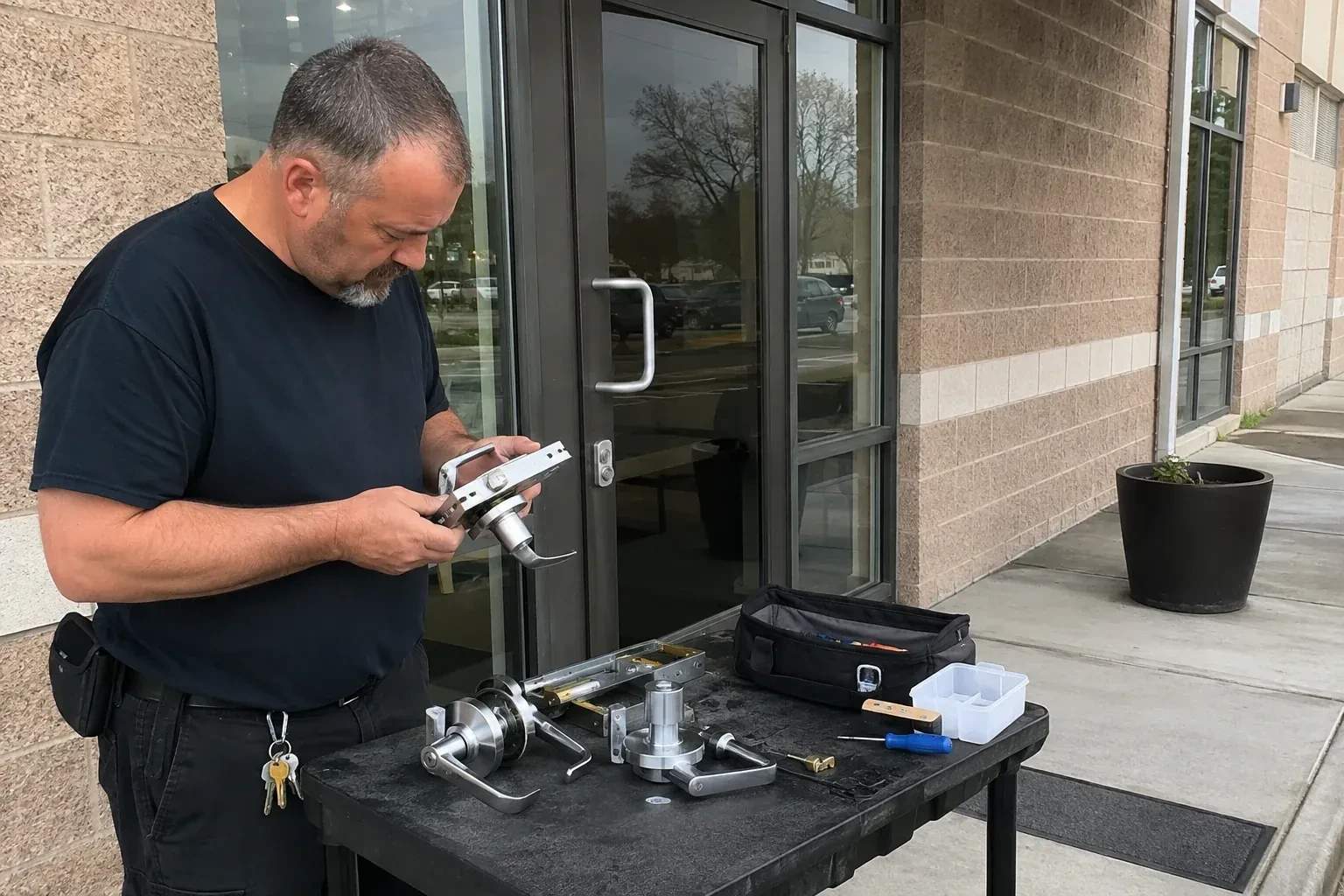
The door tells the locksmith what kind of hardware it can even accept. A hollow-metal or solid wood door with a mortise pocket cut into the edge takes a mortise lock body; an aluminum storefront door with a narrow stile takes a purpose-built narrow-stile lock or hookbolt; a standard cylindrical bore takes a heavy-duty lockset sized to that hole pattern. Handing, swing, backset and existing strike location are measured so the replacement drops into the prep that is already there rather than requiring the door itself to be re-cut.
Testing under real conditions before signing off
The finished hardware is cycled from both sides, under the door's normal swing and closing force, and by more than one person where staff are on site to try it, since a lock that operates cleanly for one hand may bind for another depending on height and grip. Any electric strike or reader tie-in is triggered several times to confirm consistent release. Only once the hardware performs the same way on repeated tries is the work considered finished rather than merely installed.
Fire and exit requirements satisfied, not just noted
Where the door forms part of a fire separation or a required exit route, the new hardware is listed for that use and the door has been tested to confirm it still closes and latches on its own. Any push-type release hardware installed to meet an occupant-load threshold has been checked across the whole route it serves, not just at the one door where the call started. The business leaves with an opening that satisfies the condition that triggered the work, rather than a lock that merely looks similar to what was there before.
Commercial-Grade Lock Replacement
In the van
- Interchangeable-core cylinder
- Listed panic or exit hardware
- Restricted keyway cylinder
- Hookbolt and deadlatch hardware
- Strike plates and keepers
What affects the quote
Same fees day, night or weekend
1Restricted or patented keyways
A restricted keyway usually costs more as hardware than a standard cylinder, and duplicate keys are controlled through the manufacturer or distributor rather than cut freely; some restricted programs require formal registration, while others control the same blanks without a signed authorization step.
2Panic or exit hardware
Listed exit devices cost more than a standard lockset and are quoted per opening, since a route requiring this hardware often needs it consistently across more than one door along that path.
3Fire-rated or listed hardware requirements
A door that is part of a fire separation needs hardware listed for that specific rating, which is a narrower and typically costlier category than general-purpose commercial hardware, and the quote reflects that requirement rather than a standard substitute.
Commercial-Grade Lock Replacement: questions
Will replacing the lock affect my alarm or access-control system?
It can, if the door already carries a door position switch, an electric strike or a card reader, so the locksmith checks for that wiring before starting and reconnects and tests it alongside the new mechanical hardware. The goal is a door where the mechanical lock and the electronic system agree with each other rather than one working around the other.
What is a grand-master key system, and does a small business need one?
A grand-master system adds a layer above a standard master key, useful for a business with several buildings or departments where one senior key should open everything and mid-level keys should open only their own area. A single-location business with a handful of doors usually only needs a straightforward master and change-key structure, without the extra layer.
Do exit devices need any ongoing attention after installation?
Yes. Exit devices and panic hardware are mechanical assemblies that see heavy use on a required exit, so periodic checking that the latch engages fully, the release bar moves freely, and any electrified or alarmed function still triggers correctly is worth building into the same schedule as other fire-safety equipment in the building.
Commercial Locks
- Master Key System DesignA dental office wants the front desk to lock up at night without ever holding a key to the room…
- Access Control InstallationThe back door of the shop runs on one key, and by now it lives on six different rings: yours, two…
- Panic & Exit HardwareThe new access-control reader at the staff entrance works fine going in, but nobody has sorted out…
Commercial-Grade Lock Replacement near you
Every lock service we provide in Toronto starts with the same first step, which is looking at the door properly before deciding anything. The individual pages below explain what that look involves for each job, how the work is carried out, and what to expect from the hardware afterwards.