Lockouts · Toronto
Broken Key Extraction
The key went in like any other morning, you turned it, and something gave with a small metallic click. The bow is still between your fingers.
Broken Key Extraction
In plain words
If a key has just snapped in your lock, the most helpful thing you can do is nothing further to the lock. Keep the half in your hand, note whether the door is locked, and resist the tweezers and the glue, both of which push the piece deeper and add material the locksmith must clear first. On the phone, describe the lock, whether any of the blade shows, and whether the key turned when it broke. Have photo identification to hand, or the ownership papers if it is a vehicle. That short conversation means the locksmith arrives with the right extractors and a plan.
How the visit goesThe key went in like any other morning, you turned it, and something gave with a small metallic click. The bow is still between your fingers. The rest of the blade is sitting inside the deadbolt, and the door is locked.
Toronto
How the visit goes
What has already been tried
Before choosing a tool the locksmith asks what has gone into the keyway since the break. Tweezers often push a fragment deeper; a screwdriver tip can bend pins; a drop of glue on the other half bonds to nothing useful and leaves a film that has to be dissolved before extractors will slide. A second key jammed on top of the first is a common find. None of this is anything to be embarrassed about; it just changes the plan, and knowing about it in advance means the right solvent, a plug follower or a spare cylinder is in the van before work starts.
Taking the cylinder apart to free it
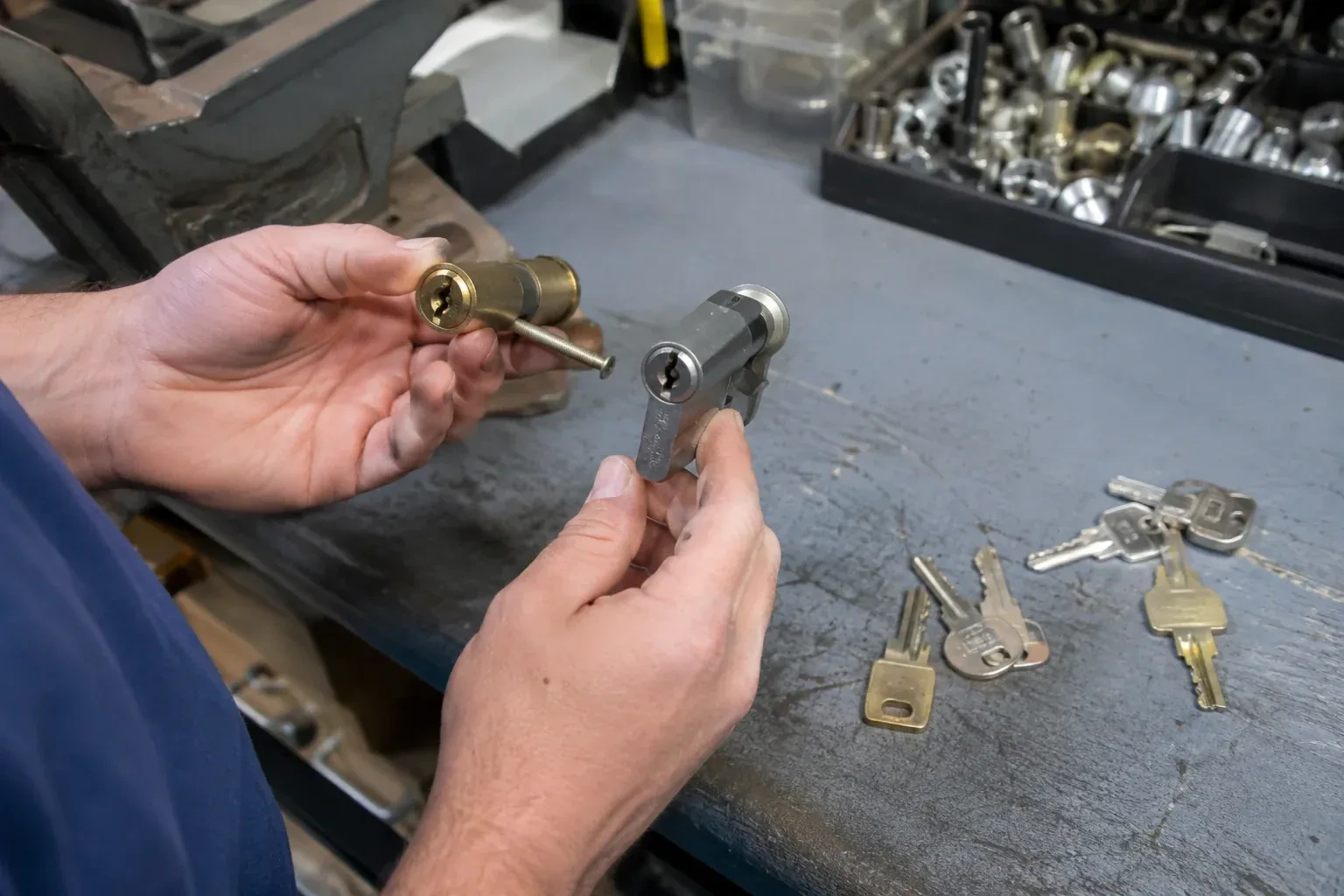
Occasionally a piece is too deep, glued in, or wedged past the pins where no extractor can reach. On a serviceable, removable cylinder, the lock is serviced from behind: removed from the door or padlock (a rekeyable padlock is normally unlocked first), its cap or retaining clip taken off, and a plug follower used to push the plug out while the top pins and springs stay in place. With the plug in hand the fragment is tapped out from the rear, the pins inspected, and everything cleaned before reassembly. Where the cylinder is non-rekeyable, damaged or will not free this way, a replacement cylinder is the alternative, explained first.
Habits for the freezing months
A winter break leaves you with a dried, lubricated cylinder and one rule: when the key stops partway, you stop too. Carry a small lock de-icer in a coat pocket or the glovebox; a few seconds of it, or the warmth of a cupped hand on the cylinder, frees a frozen plug without asking anything of the blade. Shut the storm door before freezing rain, and fit a keyhole cover on a side door that catches meltwater during a thaw. Ice is one of the winter causes the locksmith sees often, alongside worn keys, misalignment and dirty or worn cylinders, and it is one of the easiest to prevent.
Broken Key Extraction
In the van
- Spiral key extractors
- Replacement cylinder or deadbolt
- Compressed air for the keyway
- Fine-jawed extractor pliers
- Tension tool for resetting the plug
What affects the quote
Same fees day, night or weekend
1Drilling and a replacement cylinder
On the rare occasion a cylinder must be sacrificed, the price includes the new cylinder or complete deadbolt plus fitting it, and that is agreed with you before the drill is picked up.
2When you call
Whatever hour you call about a broken key extraction — morning, evening, a weekend or a holiday — the amount is the same. Locksmiths are reachable at any time, and the exact figure is confirmed on site once the technician has seen how deep the fragment sits.
3Rekeying other doors to match
If the cylinder ends up rekeyed or replaced, matching the other exterior locks to the new key is priced per cylinder, and simplest while the locksmith is already there.
Broken Key Extraction: questions
My car key snapped in the door. Is that a locksmith job?
Yes. Vehicle door locks and ignitions use wafer cylinders that respond to the same extractor tools. Once the blade is out, the plastic head you are holding, which carries the transponder chip and any remote buttons, can usually take a freshly cut blade so the car keeps recognizing it. The ignition is checked as well, since a broken key sometimes disturbs the wafers.
Part of the key is sticking out. Can I just pull it with pliers?
If a good length shows and the plug is at its normal rest position, a firm straight pull sometimes works. The risk is pushing instead of pulling, or twisting, which drives the piece deeper and can bend a pin. If it does not come on the first gentle try, stop there and leave it for extractor tools, which grip the cuts without loading the cylinder.
Is a broken key a sign the whole lock is worn out?
Sometimes, and the visit answers it. A key that failed from its own fatigue in a clean, smooth cylinder says nothing against the lock. A key that broke because the pins were worn flat, the cap had loosened or the keyway was full of grit says the cylinder needs a service or a rekey. One that broke in a corroded, pitted plug is telling you the lock is due for replacement.
Lockout Services
- Business Lockout ServiceYou signed the lease on the unit last week and the landlord handed over possession, but the…
- Break-In Damage Lock RepairThe back door looks closed until you touch it.
- Seized & Jammed Lock OpeningThe old mortise lock on the front door of the house turns the key halfway and stops with a dull…
Broken Key Extraction near you
Every lock service we provide in Toronto starts with the same first step, which is looking at the door properly before deciding anything. The individual pages below explain what that look involves for each job, how the work is carried out, and what to expect from the hardware afterwards.