Car keys · Toronto
Motorcycle & Scooter Keys in Toronto
The key turns half a rotation in the ignition, catches, then the blade lets go with a small snap. The bow is still in your hand; the rest of it is somewhere inside a lock that now has nothing to grip.
Motorcycle & Scooter Keys
In plain words
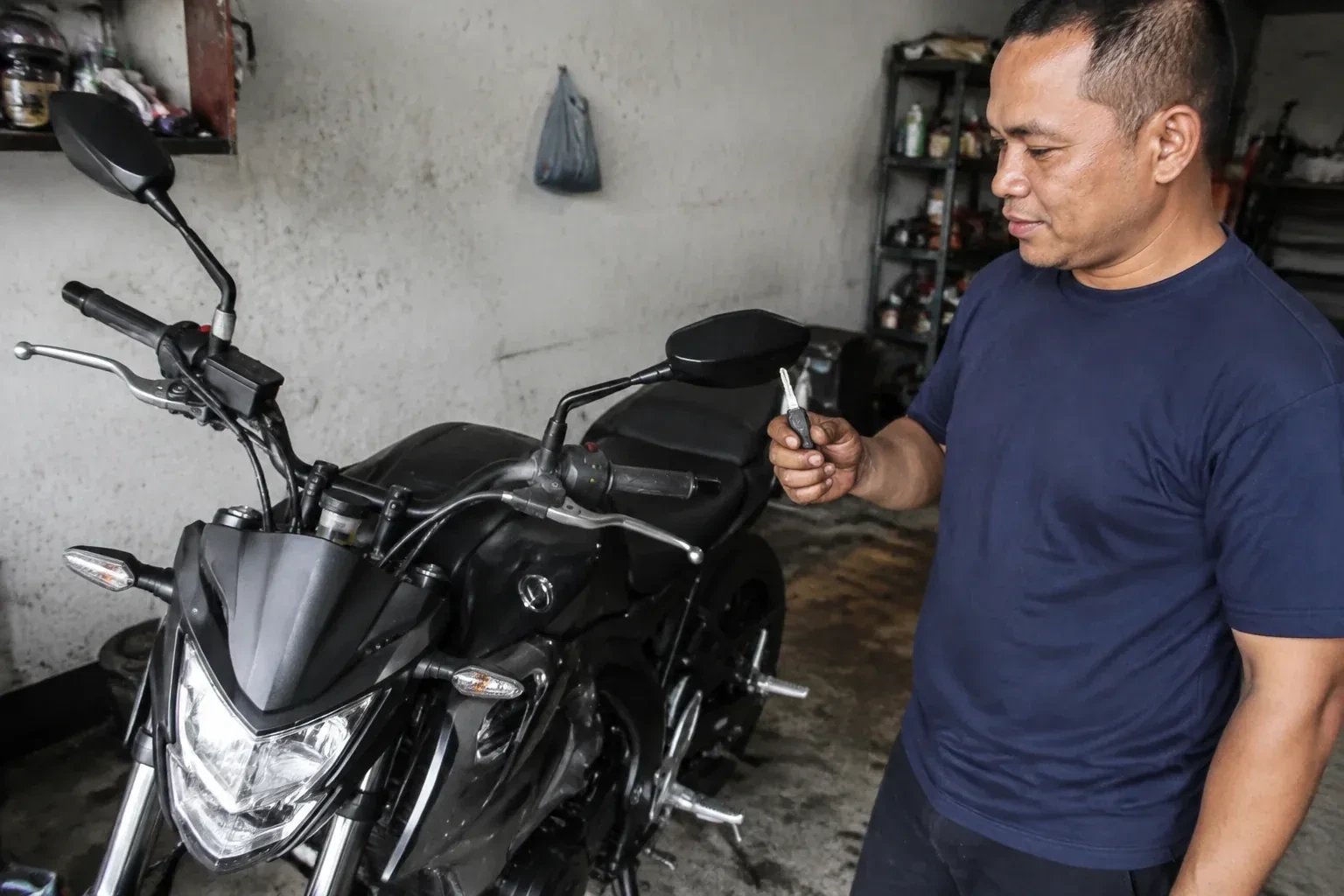
A machine bought without a full history often arrives with one worn key and no idea what, if anything, opens the seat or the fuel cap. Key service in that situation starts by identifying every lock on the machine and testing whichever key came with it against each one, then decoding or cutting whatever the existing key does not already cover. The result is a full, known set of keys for the machine rather than a single blade of uncertain origin.
How the visit goesThe dash lights come on, the starter cranks, and the engine simply refuses to catch, though the same key has run this bike since it was new. It could be the key and ignition module no longer agreeing, or an ordinary fuel or ignition fault sharing the same symptom.
Toronto
How the visit goes
Checking the steering lock's condition
Where the steering lock is a separate mechanism from the ignition switch, or has simply sat unused through a season of storage, the locksmith tests how freely it turns before relying on it to hold the front wheel. A lock that resists turning, catches partway, or needs unusual pressure is flagged early, since forcing it with a new key risks the same snapped blade that likely affected the old one. This check takes only a moment but matters, because a steering lock that will not release properly can leave the machine effectively immobile even with a working key in hand.
Decoding a lock with no key at all
Without any key to copy, the lock has to speak for itself. The locksmith picks the cylinder and reads each wafer's resting depth with feeler tools or a small scope, or uses a decoder built for that keyway, translating what is found into a cutting code. A key is then cut to that code and tested in the lock before being trusted on the ignition proper. This route takes longer than copying an existing key, since every wafer has to be read individually, but it produces a key that matches the lock exactly rather than an approximation.
A key set that covers the whole machine
Where the locks are compatible, the visit ends with them all answering to the same key: ignition, steering, seat and, where fitted, the fuel cap or a storage compartment. Before leaving, each one is opened and closed again with the owner watching, so there is no guessing about which key does what. Carrying one key instead of two or three is a small change, but it is the detail most owners mention afterward, since a single blade on the ring is one less thing to sort through at the pump or on the side of the road.
Motorcycle & Scooter Keys
In the van
- Pick and tension tools
- Manufacturer-approved lock cleaner or lubricant
- Code-cutting machine
- Transponder programming unit
- Replacement ignition or steering lock
What affects the quote
Same fees day, night or weekend
1Condition of the existing lock
A clean, well-maintained lock accepts a new key with little extra work. One affected by corrosion or grit may need cleaning or light service before a key can be tested reliably against it.
2Whether an immobiliser is fitted
A machine with an immobiliser needs its electronics paired as well as its lock cut, which adds equipment and testing beyond a purely mechanical key, and is reflected as its own step in the quote.
3Whether a working key already exists
Whether a working key still exists changes the job considerably: cutting or duplicating from one is the more direct route, while decoding a lock with nothing to reference takes longer and shapes the time reflected in the total.
Motorcycle & Scooter Keys: questions
What should I do to look after a new key or lock afterward?
Very little beyond two simple habits: wipe the key clean before use, especially after a wet ride, and, where the lock's own maker calls for it, a light dose of the specified lubricant once or twice a year. Storing a spare somewhere other than on the machine itself rounds out the care a new key or lock generally needs.
Can a rusted or gritty lock still be opened and given a new key?
In most cases, yes. The lock is cleaned out, its wafers and springs cleared of grit and corrosion, and the mechanism dressed with whatever lubricant its own maker specifies before a new key is cut or tested. Only a lock that has corroded to the point of cracking or seizing solid tends to need outright replacement rather than cleaning, and that is usually visible once the lock is opened up for inspection.
I bought a used bike with just one worn key. What happens now?
The locksmith first identifies every lock on the machine, ignition, seat and fuel cap included, and tests the key that came with it against each one. Whatever the existing key does not already cover is then cut or decoded to match, so the outcome is a complete, known set of keys rather than a single blade of uncertain history. It is a common situation and does not require any prior records to resolve.
Car Keys
- Car Key ReplacementThe engine cranks, catches for a second and dies, and a small key-shaped light keeps blinking on…
- Spare Car Key DuplicationThe blade on the everyday key has gone shiny and thin along one edge, and lately it needs a wiggle…
- Key Fob ProgrammingThe remote clicks the way it always has, but the vehicle no longer locks, unlocks or answers with…
Motorcycle & Scooter Keys near you
Every lock service we provide in Toronto starts with the same first step, which is looking at the door properly before deciding anything. The individual pages below explain what that look involves for each job, how the work is carried out, and what to expect from the hardware afterwards.